
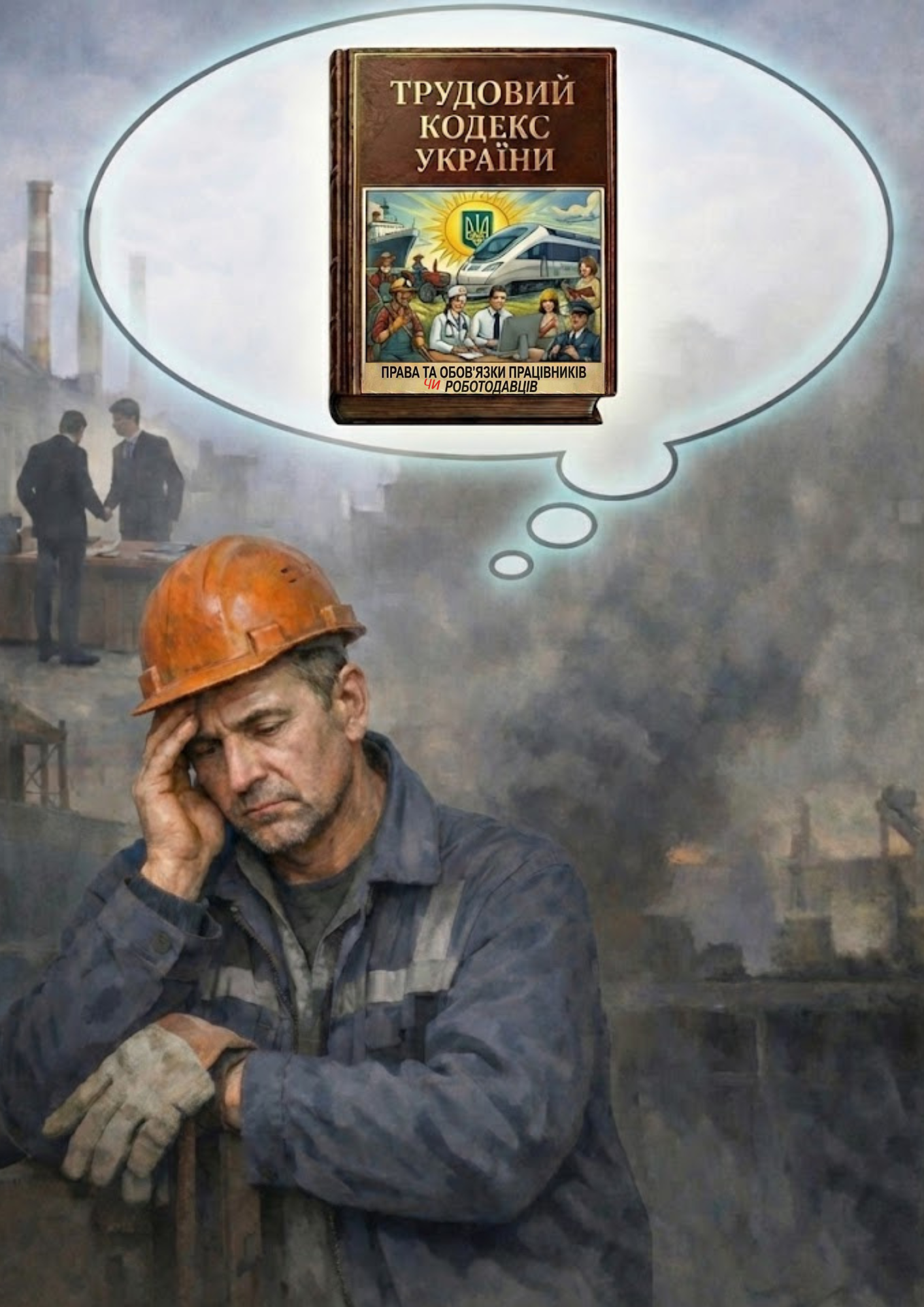
On January 7, 2026, the Ukrainian government voted at its meeting on the text of the draft new Labor Code of Ukraine, which had been worked on in several stages since the beginning of President Volodymyr Zelenskyy's term. Moreover, attempts to update the “Labor Constitution” of Independent Ukraine have been ongoing for at least the last 25 years.
The Federation of Trade Unions of Transport Trade Unions of Ukraine has analyzed the text of the new draft, both from the perspective of protecting the rights and interests of hundreds of thousands of Ukrainian transport workers representing the railway, maritime, aviation, automotive, logistics, and other critical infrastructure sectors, and with regard to respecting the rights of millions of other Ukrainian workers in the context of ending the war, post-war reconstruction, and future integration into the common labor market with the EU.
The proposals of the FTTU will be sent to the Joint Representative Body of Trade Unions at the national level, to the relevant Committee of the Verkhovna Rada of Ukraine, which will continue to work on the government bill, as well as to the parliamentary factions and groups of the Ukrainian Parliament.
We emphasize that, in our opinion, the goals and objectives announced by the Government regarding:
maximum de-shadowing of the labor market,
reducing excessive bureaucracy in labor relations,
encouraging Ukrainians to return from abroad,
involvement of all categories of potential employees in the labor market, especially those who, due to the war, require special approaches to working conditions (including veterans, internally displaced persons, women with children, persons with disabilities, young people, etc.)
creating conditions for active business development and implementation of international projects for the reconstruction of the country,
effective integration of Ukraine into the common labor market with EU countries, etc.
will not be achieved by adopting and implementing the document in the version submitted to the Verkhovna Rada of Ukraine without making significant changes and additions in the process of preparing it for further readings. In addition, the content of certain provisions of the document needs to be brought closer to the exceptional challenges and needs that have become part of Ukrainian reality over many years of economic crises and war.
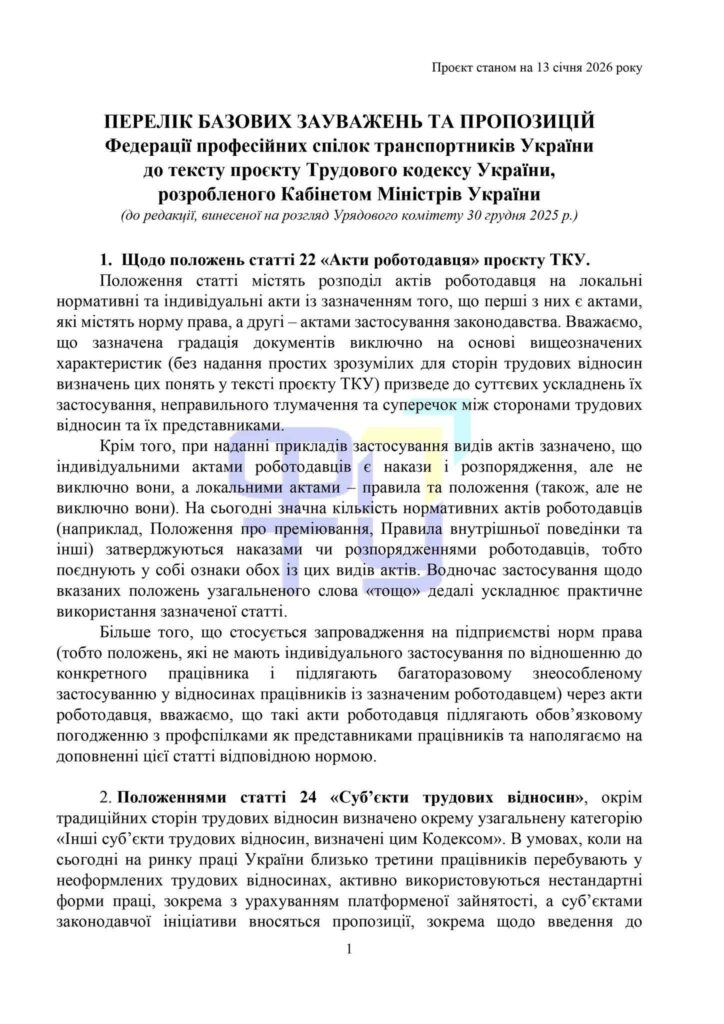
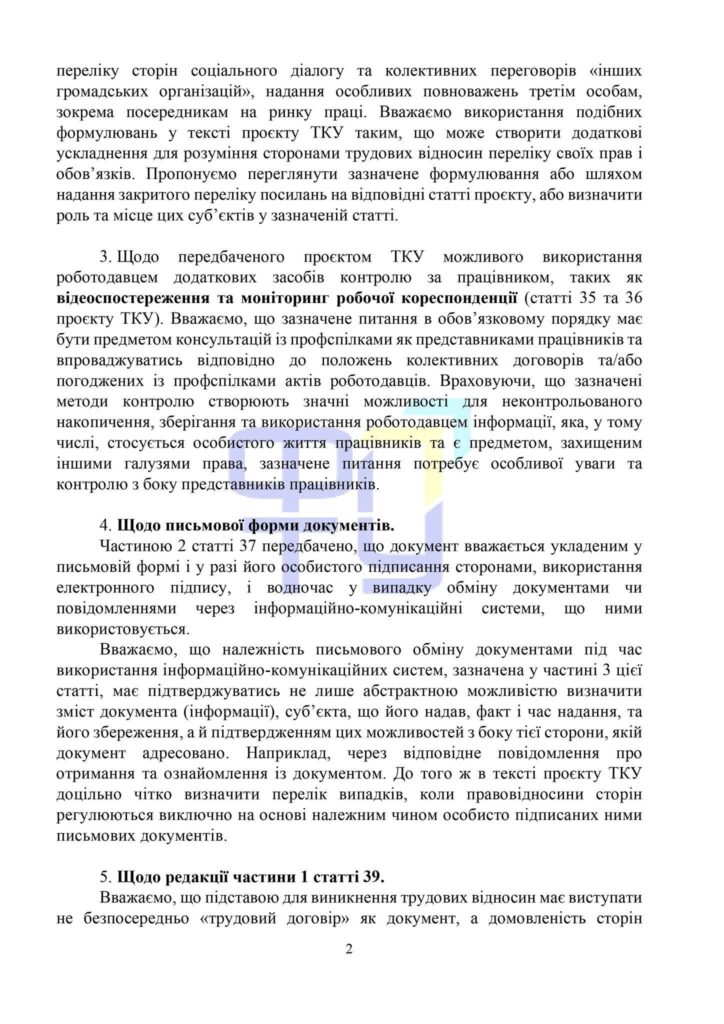
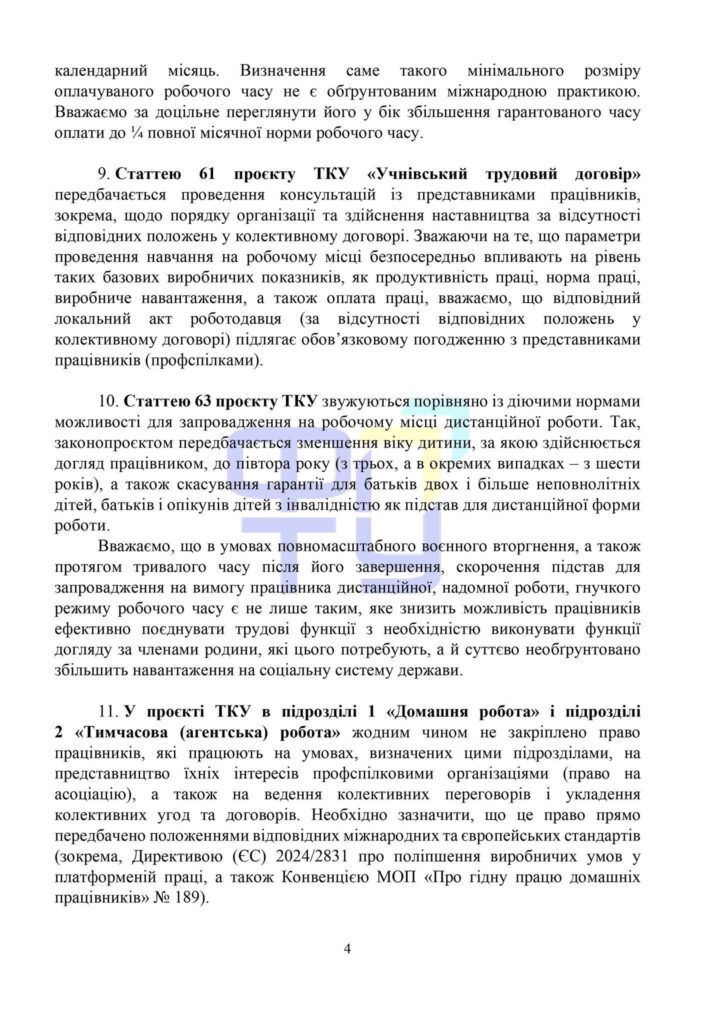
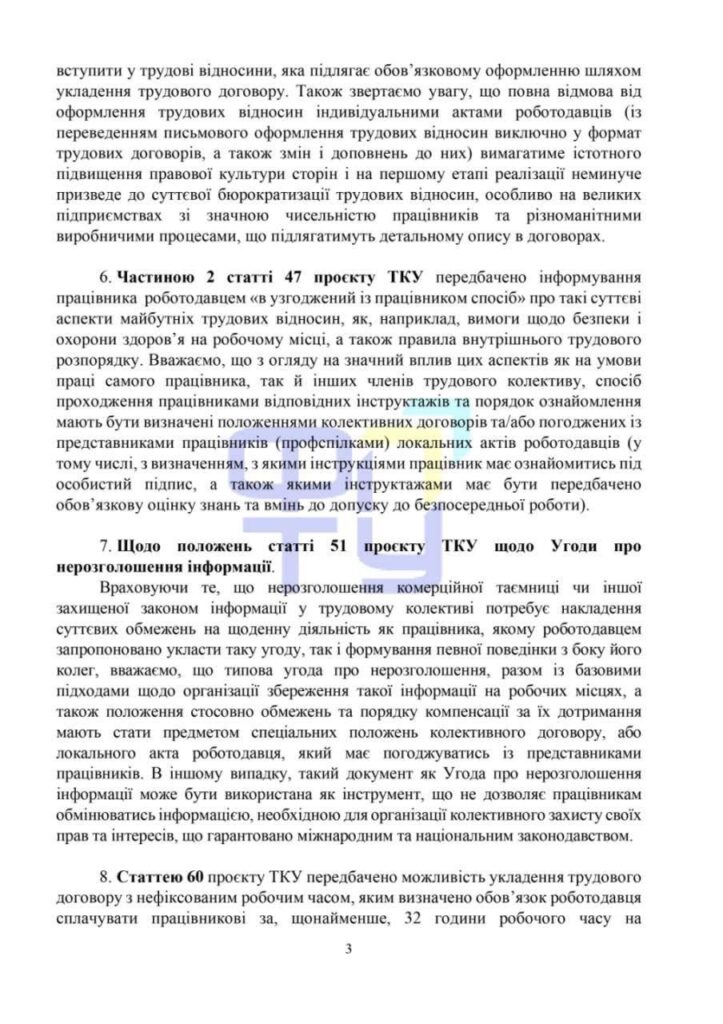
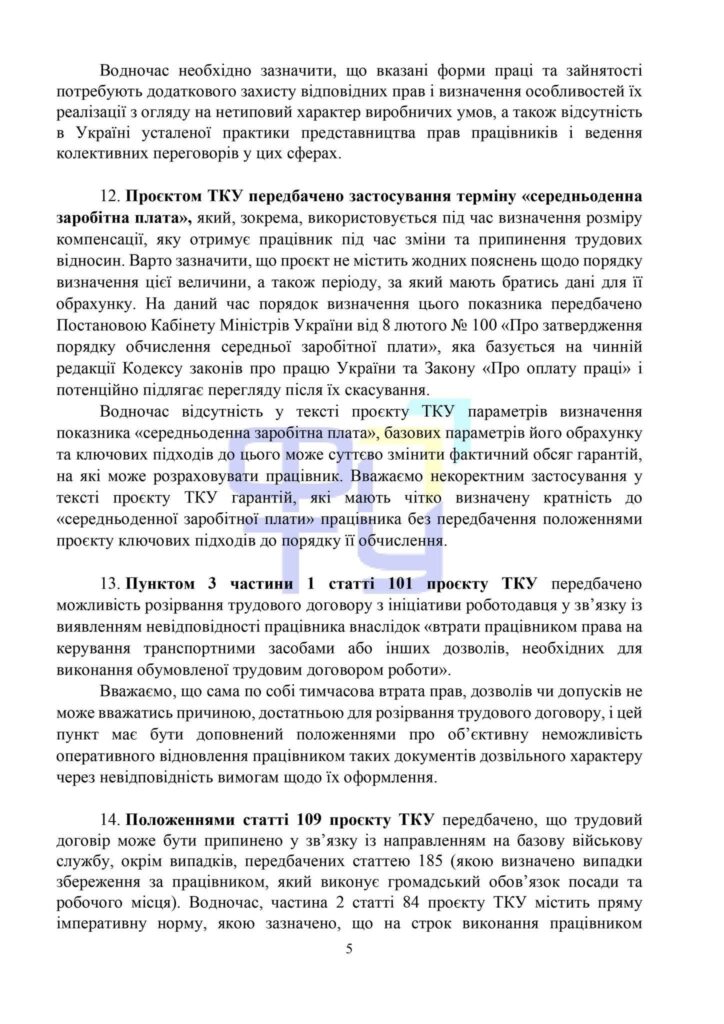
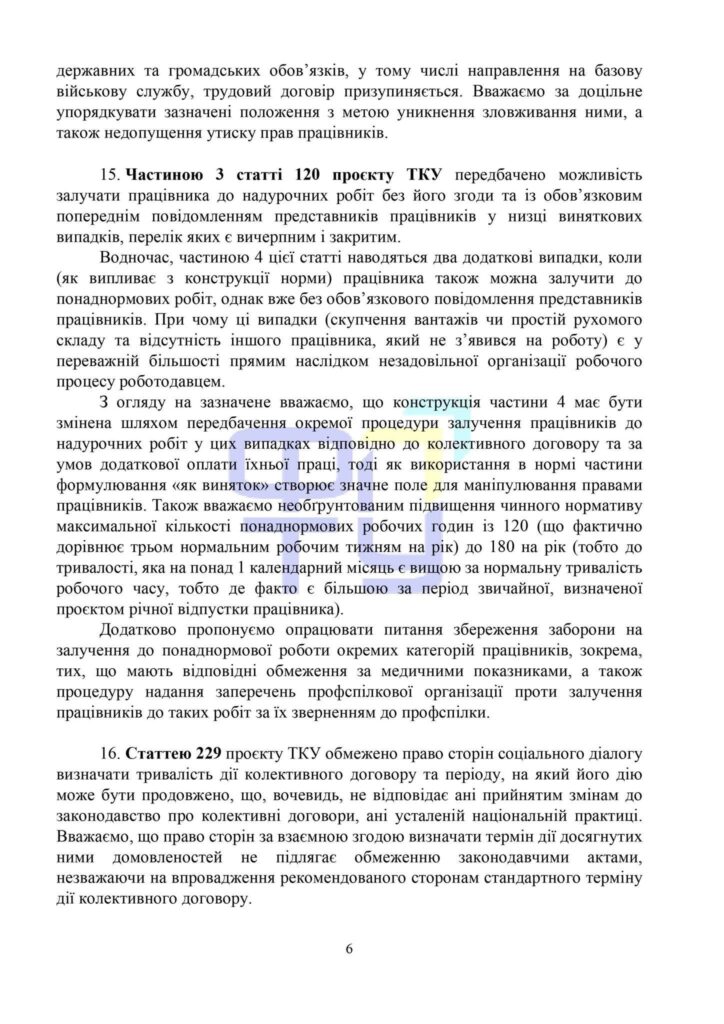
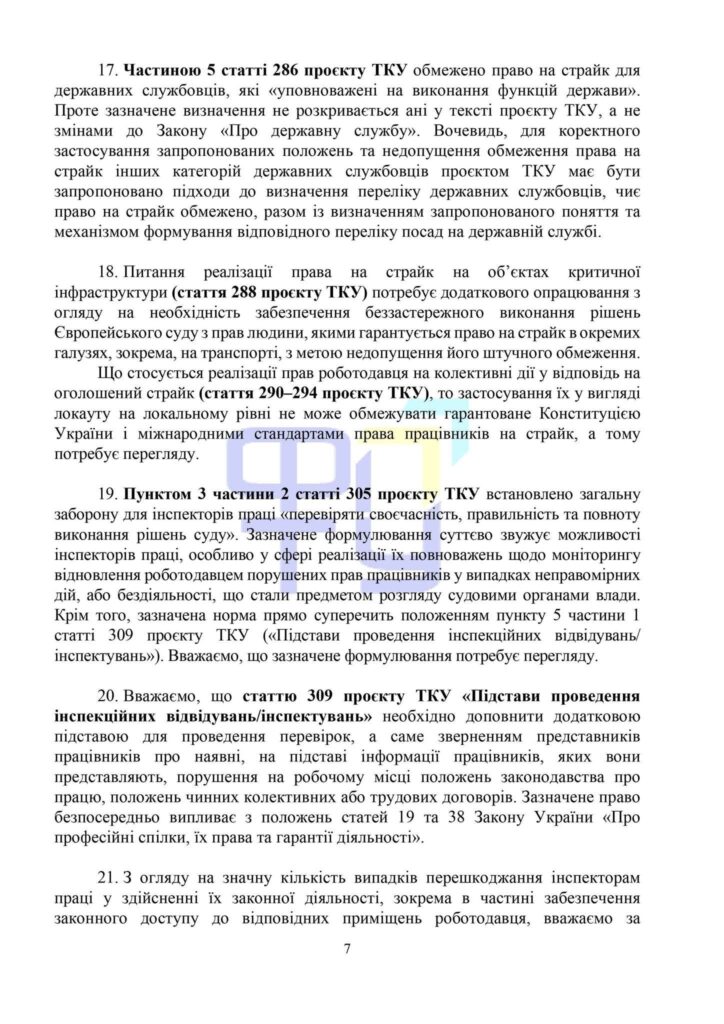
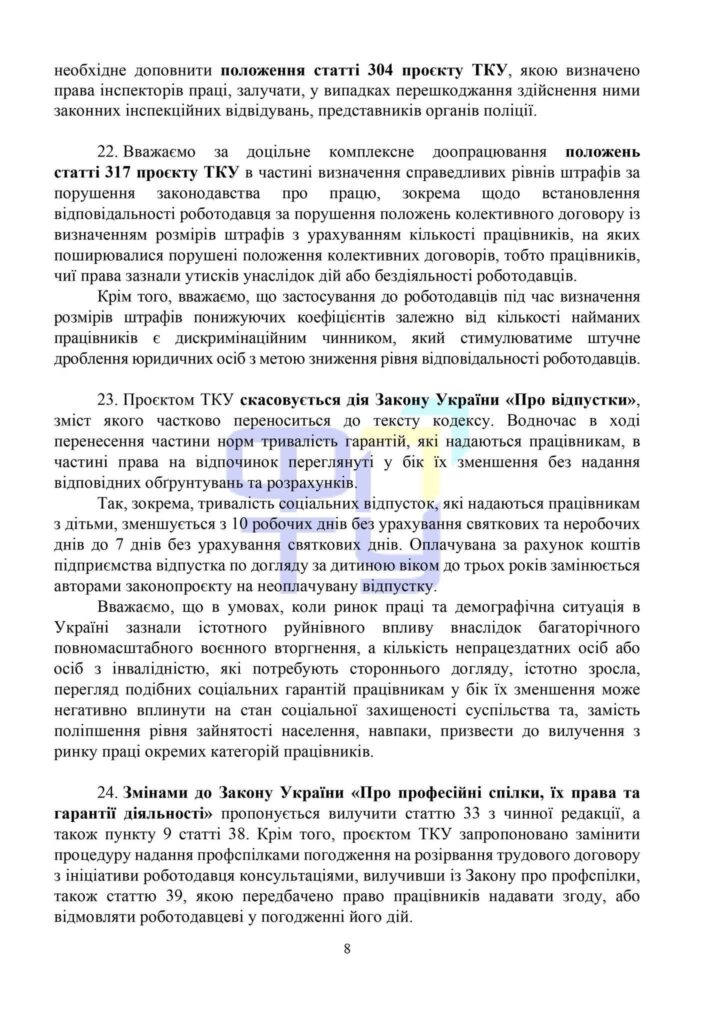
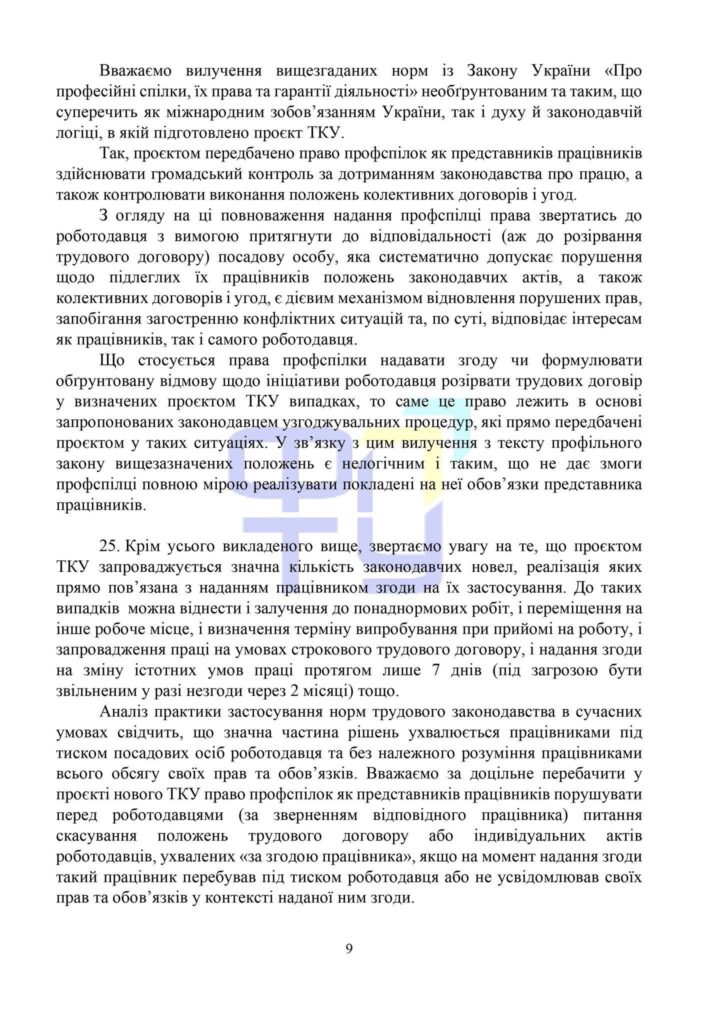
We have prepared a basic list of specific comments and proposals for the draft Code, which, if taken into account, could make the document a true European “Labor Constitution of Ukraine” without causing the collapse of labor relations following the repeal of the Labor Code, which has served Ukrainians faithfully for many decades. It has undergone radical changes and revisions and, despite all the challenges and criticism, has prevented the Ukrainian labor market from collapsing during the economic crises of the 1990s, the aggression in the East, the pandemic, and the full-scale invasion.
We would like to emphasize once again that in order to ensure the proper transition of the labor market out of the shadows, it is necessary to establish an independent, effective, and transparent labor inspectorate, along with the introduction of European mechanisms for the collective protection of workers' rights and interests.
The written formalization of labor relations, which should simply and clearly regulate the relationship between employer and employee, should not be an end in itself or the main focus of production processes, and flexible working conditions should not turn life into a constant search for work for individuals and personnel for businesses.
Trade unions and employers' organizations must receive authority and impetus from the state in order to quickly resolve labor disputes through effective cooperation without unnecessary recourse to the courts. Wages should grow dynamically to reach European averages, safe working conditions and occupational health should become a joint task for employers and trade unions, and business expenditure on recruitment and retraining should not hinder productivity and economic efficiency.
As a result of the labor reform, Ukraine should take the best from the European social model and strengthen the standards of the common European labor market, without becoming the “weakest link” in terms of respecting citizens' rights and ensuring freedoms for doing business and reviving the economy.
We express our readiness to professionally participate in the finalization of the project at all stages of further work with the document.
 English
  Ukrainian